

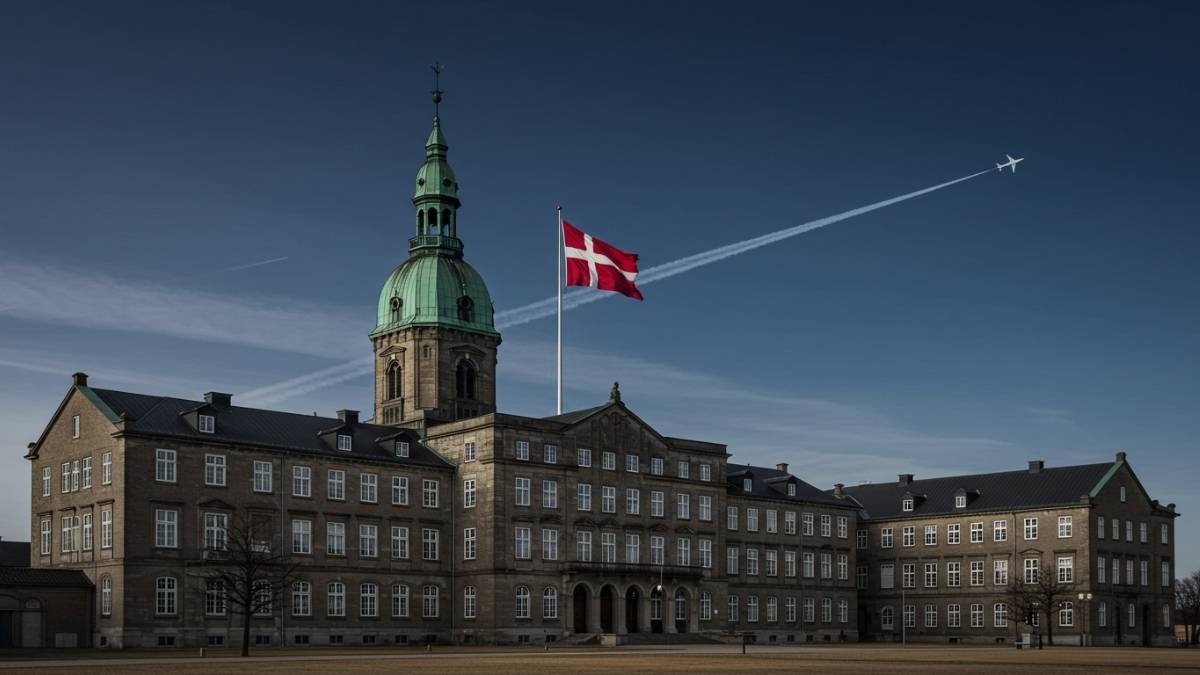
The term statens luftfartsvæsen refers to a crucial, though now historical, body in the Danish public administration. Literally translating to “The State Civil Aviation Authority” or “The Civil Aviation Administration of the State,” statens luftfartsvæsen (often abbreviated as SLV) was the central government agency responsible for overseeing and regulating all aspects of civil aviation in the Kingdom of Denmark. Its existence marked a critical era of post-war aviation development and strict adherence to international safety standards. For nearly two decades, its policies and oversight shaped the safety, economics, and efficiency of Danish aviation regulation until its eventual merger in 2010.
Table of Contents
What Was statens luftfartsvæsen? Defining Denmark’s Former Aviation Regulator
Established as a key agency under the Danish Ministry of Transport (Transportministeriet), Statens Luftfartsvæsen served as the Danish Civil Aviation Administration (CAA-DK). Its fundamental purpose was to ensure that all civil air traffic, whether commercial or private, adhered to the highest standards of safety, security, and technical compliance. Unlike air traffic control bodies (like Naviair), SLV was the regulatory authority, setting the rules rather than controlling the movement of aircraft in real-time. This dual function of oversight and technical regulation was critical to Denmark’s reputation as a reliable player in global aviation.
The Mandate of SLV: Core Responsibilities in Danish Aviation Regulation
The operational mandate of SLV covered a vast scope of activities, making it the supreme authority in all matters of Danish aviation regulation. Its core responsibilities included:
- Rulemaking and Implementation: Translating international standards (from ICAO and, later, EASA) into binding national law.
- Licensing and Certification: Issuing certificates for airworthiness, certifying aircraft maintenance organizations, and licensing pilots and flight crew.
- Safety Oversight: Conducting inspections and audits of airlines, airports, and aviation personnel to enforce safety protocols.
- Economic Regulation: Overseeing air traffic rights, route allocations, and certain aspects of consumer protection.
This broad mandate ensured a systemic approach to safety that encompassed the entire air transport system, from the smallest private aircraft to the largest commercial carriers.
Also, read What Happened to Aina Dobilaite? Shocking Truth Revealed!
Jurisdiction Beyond Borders: Oversight of Greenland and the Faroe Islands
A unique aspect of SLV‘s role was its extended area, which covered the autonomous territories of Greenland and the Faroe Islands. These regions presented unique challenges due to their remote locations, extreme weather conditions, and reliance on air travel for critical connectivity. Statens Luftfartsvæsen was responsible for adapting general Danish and European aviation rules to fit the specific operational and geographical needs of these challenging environments, ensuring safety standards were consistently maintained across the entire Kingdom.
The Essential Role of Safety and Certification
Safety was the non-negotiable priority for statens luftfartsvæsen. The agency’s technical personnel were tasked with the meticulous certification of new aircraft types and the continuous monitoring of existing fleets. They were the national experts responsible for air accident investigation, working to identify causes and implement corrective measures to prevent future incidents. This rigorous focus on technical safety mirrored the best practices of civil aviation authorities worldwide, solidifying the safety record of Danish Civil Aviation Administration.
Operating Infrastructure: The Case of Bornholm Airport
In addition to its regulatory functions, SLV had a direct operational role, most notably the operation of Bornholm Airport (Rønne Airport). Located on the island of Bornholm in the Baltic Sea, the airport is vital for connecting the island with mainland Denmark. This operational task demonstrated the agency’s commitment to maintaining essential domestic air transport links, a responsibility that went beyond mere paperwork and oversight.
Also, read Zzzvbo: A Comprehensive Guide to Features, Uses, and Future Potential
The Evolution of Danish Civil Aviation Administration
The history of Danish Civil Aviation Administration reflects a continuous process of centralization and harmonization, driven by European integration. As the EU developed its single aviation market and established the European Aviation Safety Agency (EASA), national bodies like SLV had to shift their focus from writing all the rules to implementing and enforcing pan-European standards. This evolution saw the agency move towards a greater emphasis on system audits and collaborative oversight within the European context.
The 2010 Merger: From Statens Luftfartsvæsen to Trafikstyrelsen
The defining event in the history of statens luftfartsvæsen occurred on November 1, 2010, when it was formally merged with the Danish Transport Authority (Trafikstyrelsen). This administrative consolidation was part of a larger government initiative to streamline the oversight of various transport modes air, rail, and road under a single, unified agency. This merger meant the name Statens Luftfartsvæsen ceased to exist as an independent entity.
Danish Transport Authority: Continuing the Legacy of statens luftfartsvæsen
Today, all the former responsibilities, personnel, and expertise of statens luftfartsvæsen are housed within the Danish Transport Authority (Trafikstyrelsen). The transition ensured that the country’s exacting standards for air safety and regulation were not only maintained but potentially enhanced through administrative synergies with other transport sectors. The Danish Transport Authority continues to be the national body responsible for civil aviation and railway safety, drawing directly on the deep institutional knowledge inherited from SLV.
International Collaboration: The Influence of ICAO and EASA
The regulatory work of SLV, and now the Danish Transport Authority, has always been fundamentally shaped by international organizations. The International Civil Aviation Organization (ICAO) sets the global baseline for safety and standards, while EASA provides the comprehensive legal and operational framework for European skies. Statens Luftfartsvæsen played a direct role in implementing these standards, contributing to the harmonized safety environment that allows for seamless air travel across Europe and the globe.
Also, read Tamilprint CC 2025: Powerful Guide to Safe Movies & Streaming
Impact on Domestic Air Travel and Infrastructure Development
The regulatory policies and infrastructure operations managed by statens luftfartsvæsen had a profound impact on domestic air travel. By ensuring compliance and stability, SLV helped foster the liberalized, competitive domestic aviation market that emerged after the 1990s. Its oversight helped maintain essential routes, even after major infrastructure projects like the Great Belt Fixed Link shifted some domestic travel to rail and road.
The Enduring Significance of statens luftfartsvæsen in Modern Danish Skies
Though the name statens luftfartsvæsen is no longer in use, its Danish aviation regulation framework remains the foundational layer for modern air governance in Denmark. The work done by SLV in standardizing pilot training, certifying aircraft, and ensuring national compliance with international treaties continues under the Danish Transport Authority. The legacy of statens luftfartsvæsen is thus a persistent commitment to safety and regulatory excellence, ensuring that Danish airspace operates at the highest global standards.
FAQs Section
Q1: What does Statens Luftfartsvæsen translate to in English?
A: It translates to the State Civil Aviation Authority or Danish Civil Aviation Administration.
Q2: Does Statens Luftfartsvæsen still exist?
A: No, statens luftfartsvæsen was formally merged with the Danish Transport Authority (Trafikstyrelsen) on November 1, 2010, and no longer exists as a separate entity.
Q3: What was the geographic area of SLV?
A: SLV oversaw civil aviation in Denmark proper, as well as the autonomous territories of Greenland and the Faroe Islands.
Q4: What is the current Danish civil aviation body?
A: The current body responsible for Danish aviation regulation is the Danish Transport Authority (Trafikstyrelsen), which manages all tasks previously carried out by the SLV.
