

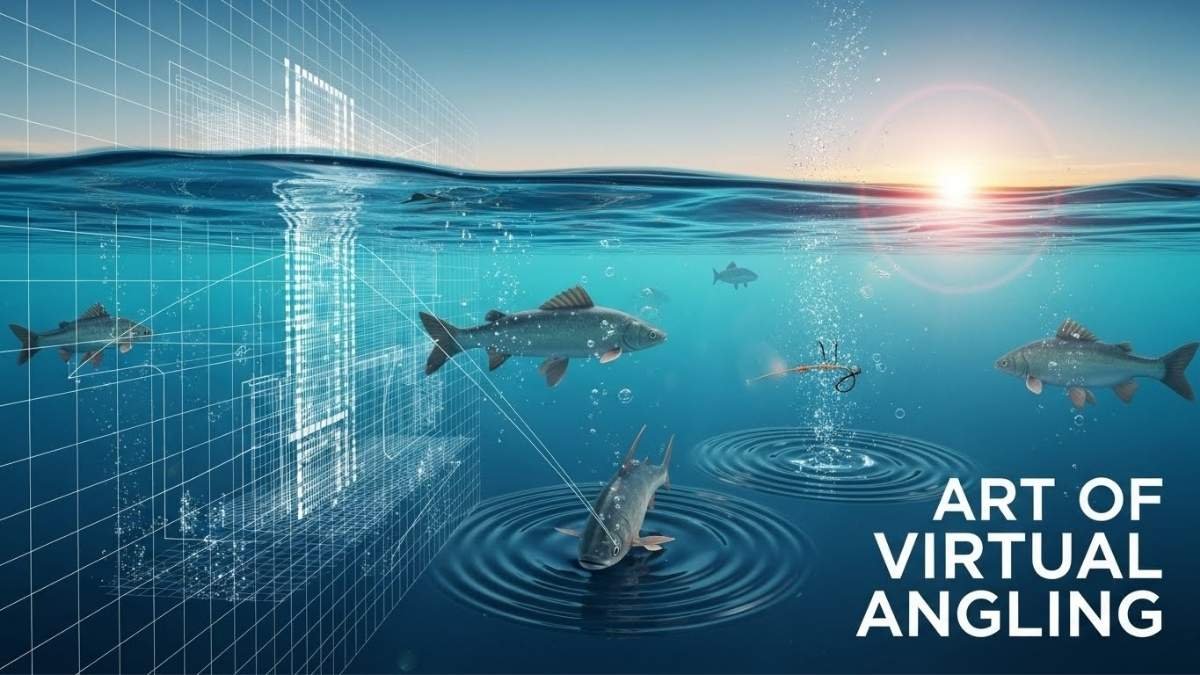
You know, for the longest time, virtual angling fishing felt like a cruel joke. You’d load up a game, find yourself standing on a suspiciously bright green bank, and cast a line that seemed to completely defy the laws of gravity. The water looked like a shimmering sheet of plastic, and when you finally got a bite, the ensuing “fight” was just a quick, frustrating series of button presses.
It was tolerable, but it never captured the essence of fishing. That peaceful, tense waiting; the sudden, stomach-lurching jolt of a strike; the muscle-burning, minute-long battle to bring a trophy home, it was all fundamentally missing.
But seriously, things have changed dramatically. The leap we’ve witnessed in both graphics and, crucially, the underlying physics engines has absolutely transformed the digital fishing experience. We’re talking about real immersion now.
Table of Contents
The Visual Tsunami: Water That Breathes
Just look at any modern fishing title. It’s genuinely difficult not to be completely blown away by the visuals. The water isn’t just a flat texture anymore. We see complex reflections that shift based on the time of day, ripples spreading with startling realism from a cast lure, and subsurface visibility that actually changes with the depth and clarity of the lake. It feels authentic because developers are deploying techniques like ray tracing and sophisticated lighting models to make the environment look less like a game and more like a high-definition nature documentary.
Also, read Wheon Grand Theft Auto 2025 Powerful Controversial Saga
And it’s not restricted to the water, either. The fish themselves are rendered with an insane level of detail. Often, you can tell the species from a distance just by the way the light catches its scales. That moment when a fish jumps? The way the spray of water refracts the sunlight, it’s genuinely breathtaking. That kind of visual fidelity isn’t just pretty window dressing; it solidifies the connection you feel to this virtual angling world.
The Physics of the Catch
Here is where the real magic happens, in my opinion. Better graphics might grab your attention, but it’s the physics that truly hooks fishing games and keeps you grinding for hours.
Early games simply couldn’t simulate the complex interactions between a fishing line, a lure, the water resistance, and a struggling fish. Today? That’s ancient history.
When you cast now, the weight of your lure, the precise flexibility of your rod, and the drag of the line against the air are all factored in. You can feel the difference between a light, shallow lure and a heavy crankbait designed to sink fast. And when a fish hits? Forget those simple button-mashing sequences of the past. Modern physics models simulate the actual tension on the line. Too much pressure, and you’ll snap it losing your gear and your prize. Too little, and the fish will simply take off with a reel-screaming run that leaves you holding a dead spool.
You’re forced to learn how to “pump and reel,” actively manage your drag settings, and adjust dynamically to the fish’s panicked movements just as you would on an actual lake or river. It becomes a genuine skill check, demanding patience and a nuanced feel for the virtual angling gear. When you finally land a big one, perhaps a trophy-sized bass that gave you a minute-long fight that felt intensely, physically real, the satisfaction is immense. That’s precisely why games like Big Bass Bonanza and similar games are blowing up. They manage to capture that core feeling of the fight itself. It’s the moment-to-moment tension that truly hooks players.
Also, read Pragmatic JP Juara100.org: Exclusive Guide to Safe Slot Play
The combination of a flawless visual presentation and rigorous physical simulation has elevated virtual angling from a novelty mini-game to a respected genre in its own right, with many great fishing games. It’s amazing to see how far we’ve come. What’s next? Will we be able to smell the freshly cut grass of the riverbank soon? Who knows, but I wouldn’t bet against it.
